


What will the future of gene doping look like, with advances in clinical research and progress on hormones like Myostatin?
Every human being has limitations. Yet, for decades, methods known as "doping" have existed to overcome these limitations in order to rapidly enhance physical, intellectual, and especially psychomotor performance. Doping is the act of injecting or ingesting pharmaceutical and/or medicinal substances into the body to increase an individual's performance. This can involve the use of natural processes or the consumption of a specific artificial substance.
Doping is widely used to overcome real or perceived obstacles, to enhance one's abilities in numerous areas such as sports, exams, job interviews, public speaking, or in difficult professional or social situations. But historically, what gave rise to doping and how does it work?
What are the effects, actions, and consequences of doping on the human body?
What are the different types of doping products available today?
What will the future of gene doping look like, with advances in clinical research and progress on hormones like Myostatin?
A bit of history
Doping is nothing new, of course. Since the dawn of time, humans have constantly sought to improve their performance using stimulant potions or homemade remedies to strengthen themselves. This is what pharmaceutical and medicinal research is today.
The first concepts of doping have existed since antiquity, more precisely in 3000 BC.
The first hominoids intended for direct ingestion mechanically enhanced the body's capabilities. Medicinal stimulant plants possess anti-fatigue properties. Known across civilizations and generations, from the Iliad to the Odyssey, plants such as ephedrine and ephedra were among the most effective performance-enhancing drugs used. Sage leaves possessed tonic properties for the Greeks and Romans.
At the time, athletes had to draw their strength from animals by eating their fresh flesh.
The zenith devours the testicles of powerful animals. In the 6th and 7th centuries BC, Greek athletes focused on taking stimulants to enhance their performance. Thus, the Greeks consumed various meats depending on the demands of their sport. Goat meat was eaten by jumpers. As for boxers and throwers, bull meat was their ally. And wrestlers ate fatty pork.
At that time, in African and Native American countries, drug use was very common to increase physical and mental energy, as well as each individual's sexual potential. Coca leaves were chewed by South Americans, and kola nuts by Africans. The kola nut is an effective stimulant against fatigue and stress, possessing stimulating properties. Iboga leaves and roots provide the strength needed to resist fatigue.
The experiment with the indigenous people of Gabon proved positive, according to Dr. Albert Schweitzer. As for the coca leaf, it provides the Bolivians and Peruvians of the Andes with the primary energy needed to walk all day without food or sleep, and to facilitate breathing in the desert.
Wild boars and deer meat were also well-known stimulants for 15th-century Breton wrestlers, Dutch navvies, and rugby players.
Doping today
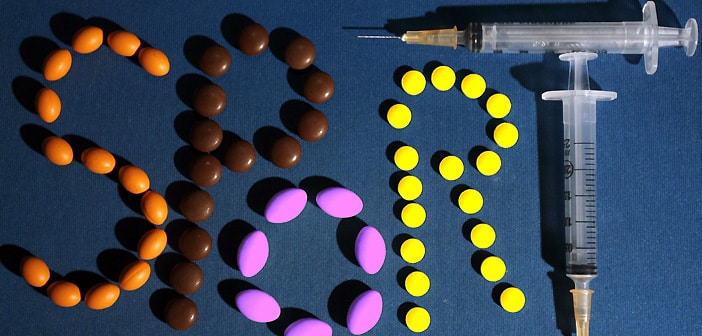
Nowadays, there are different types of doping for the body, muscles, and brain.
Doping methods aimed at modifying bodily performance today are varied.
Peptides, narcotics, stimulants, hormones, diuretics, or even beta-blockers.
Doping affects all types of sports, whether for women or men, amateur or professional.
To amplify vasoo-muscular strength. These are products that force the human body to regenerate new tissues and muscles such as... anabolic steroids, THE peptides or growth hormone as well as’blood oxygenation via EPO.
The future of doping
Clinical research has shown significant improvement in various doping substances. Thanks to the development of newly implemented techniques, elite athletes are being transformed into genetically superior performers.
Gene therapy techniques are being misused and exploited today for doping purposes to increase and maintain muscle mass in athletes, for example by increasing the production of IGF-1. Furthermore, these substances injected into the muscles are increasingly undetectable by urine or blood tests.
Only the removal of a small part of an organ or tissue, called a biopsy, allows for the detection of synthetic genes. Gene doping in the form of molecules also affects specific tissues of the human body.
The future of doping is somewhat worrying. Difficult to define, these substances are currently uncontrollable.
With the inhibition of Myostatin, for example, we are on the verge of seeing supermen on sports fields and in bodybuilding gyms.
And clinical research is constantly evolving. Products like TB500, which enable cell regeneration, are a good example.
Many pharmaceutical groups are working to find new products for gene doping.
To directly transform human genes and cells, as well as their physiological components. That is the dream of tomorrow.
These genetic doping products will control the physical performance and mental abilities of the user. The race for these products will never end.
The future of doping reassures future collaborations with the pharmaceutical industry to facilitate the exchange of information and receive confidential information to develop our athletes of tomorrow.
The only thing I'm sure of is that change is inevitable in the future and we can't remain with the old doping methods forever. Anti-doping techniques will improve. But doping will always be one step ahead; we're moving towards genetic modification or the transplantation of genetically modified organs.
It's certain that new cheating techniques will involve genetic modification of the athlete himself and everything related to him (diet, supplements, etc.).
The future of doping is bright; it will always be one step ahead of the established rules….