


Are you a little overweight and desperately want to lose weight?
Are you a beginner in bodybuilding and don't know how to achieve a body composition you can be proud of?
In this article, we will delve into a topic that could change your life for the better.
We explain what a weight loss diet in bodybuilding in the simplest way possible while highlighting an example of a weight loss diet plan to give you a good idea of what is expected of you when you decide to start a weight loss program.
But that's not all, we also tell you when you should start a weight loss program, we tell you the expected results and, finally, we give you useful tips for your weight loss program.
There is a lot to see, so without further ado, let's start by describing a weight loss diet.
What is a weight loss diet in bodybuilding?
As a bodybuilder, you have three main goals to achieve. In no particular order, the first is to improve your muscle mass (bulk), the second is to increase your athletic performance, and the third is to burn excess body fat (cut).
The third objective of bodybuilding is also known as "Cutting". This involves eliminating excess body fat and losing weight through a coordinated process that incorporates a training program and a weight loss diet.
In summary, a bodybuilding weight loss diet is a nutrition plan designed to promote fat burning and weight loss while encouraging muscle mass growth to achieve a lean and average body composition.
In a typical weight-loss program, calorie intake is reduced and daily food intake is regulated to facilitate high-intensity interval training (HIIT) for muscle gain. This allows you to lose body fat and gain muscle mass.
However, in a weight loss program, your primary goal is to burn fat and lose weight while preserving muscle gains. But to maintain your muscle gains, you need to train hard to build muscle mass in the first place, even if you're following your diet. fat reduction.
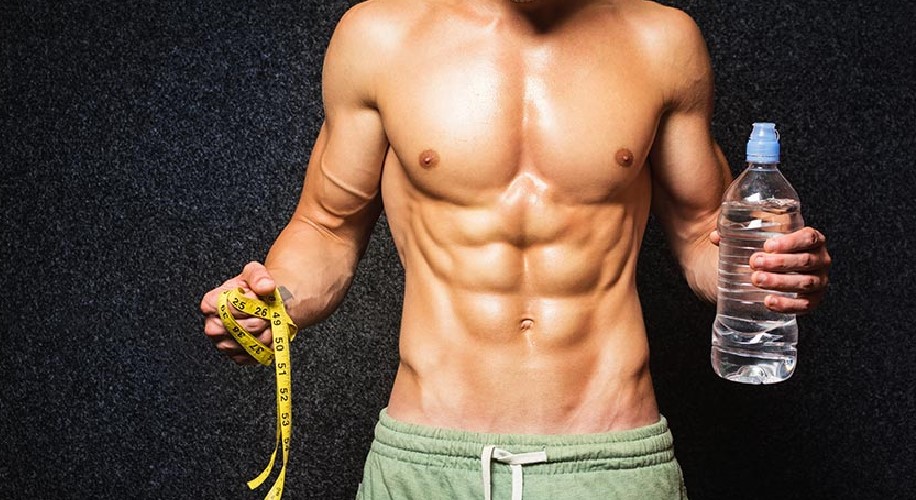
What is the best diet plan for losing weight?
The best weight-loss diet is the one that suits you best. The truth is, there are no hard and fast rules about the types of foods you should include in your diet, simply because we all have our own food preferences.
It should also be noted that some of us suffer from food allergies which makes it impossible for everyone to eat the same type of food to burn fat and lose weight.
However, there are basic principles of weight loss diets that anyone can adopt today to achieve more or less the same weight loss results.
The first thing to do in developing the best diet plan for you is to understand your macronutrient needs.
As you may already know, the three macronutrients or macros are proteins, fats, and carbohydrates.
Your daily protein intake
Your protein intake is essential for losing fat and weight. Therefore, you must include sufficient amounts of both animal and plant-based proteins in your weight loss program.
Protein is known to boost metabolism, promote satiety, and maintain lean skeletal muscle mass. When following a weight-loss diet, you should consume more protein than other macronutrients.
In fact, you eat more protein when you're on a diet for a weight loss that if you were training to gain or maintain muscle mass. If you train regularly, your protein requirements will increase even if you consume fewer calories.
According to several studies, the protein intake for a weight loss diet should be between 1 and 1.4 grams (g) per pound (lb) of body weight or between 2.2 and 3.0 g per kilogram (kg).
This daily protein requirement is also sufficient to help you maintain your muscle mass gains. So, if you weigh 200 lbs (90 kg), for example, your daily protein intake should be between 200 and 280 grams.
Your daily fat intake
It is important to note that your fat intake is crucial for the production of muscle-building hormones in your body, such as IGF-1 and testosterone.
Therefore, if you need to regulate your intake of healthy fats, you must be careful not to consume too little, as this could harm your testosterone production.
Studies suggest that your daily fat intake should represent between 20 and 30 grams of your total daily calorie intake. Note that one gram of fat is equivalent to approximately 9 calories.
Therefore, assuming your daily calorie intake is 2,000 calories, your daily fat intake should be between 44 and 67 grams.
With a HIIT program, you can consume 44 grams of fat per day while increasing your carbohydrate intake to compensate for the fat calorie deficit.
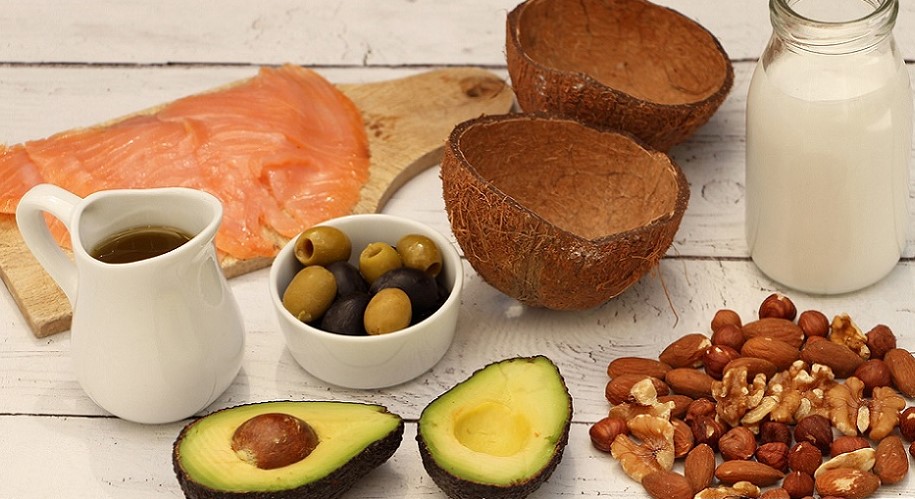
Your daily carbohydrate intake
If you want to preserve your muscle gains while following a fat-cutting diet, you need to take your carbohydrate (sugar) intake seriously.
By consuming sufficient amounts of carbohydrates, your body will use carbohydrates as energy fuel during your usual workouts instead of turning to protein sources for energy, which will cause you to lose muscle mass.
In addition, your performance during your training sessions is improved when you consume sufficient amounts of carbohydrates.
Therefore, the amount of carbohydrates you consume daily should represent the number of calories remaining once you have deducted the calories from your daily fat and protein intake in your weight loss diet.
To return to the example in this post, this amount should be between 0.9 and 2.2 grams per pound of body weight or about 2 to 5 g/kg of body weight.
Note again that one gram of fat equals 9 calories, while one gram of carbohydrates and protein equals 4 calories respectively.
If you want to calculate your daily carbohydrate intake, you need to subtract your daily fat and protein requirements from your total daily calorie intake, then divide the remainder by a factor of 4.
For example, if you weigh 200 lb (90 kg) and your total daily calorie intake for your weight loss diet is approximately 2,000 kcal, your fat intake will be 60 g and your protein intake 150 g. The remaining calories will therefore be 860 kcal.
The remaining calories are 860 kcal, or about 215 g, which represents your daily carbohydrate intake.
When should you start losing weight?
Generally, a fat-cutting diet can last from 2 to 4 months, but this depends on your weight and body fat percentage before starting the diet.
However, with regard to the timing of your weight loss regime, it is best to establish your program before a competitive bodybuilding event or competition.
Therefore, if you wish to prepare for an event, you should start your weight loss regimen 2 to 4 months before the start of the event or competition in question.
Expected results of a weight loss diet for bodybuilders
You should expect to lose a steady amount of weight of about 1 pound (1 lb) or 0.45 kg per week with your weight-loss diet. This represents a loss of 0.5 to 1 1/3 t of your body weight each week.
It is important to note that gradual weight loss is preferable to a rapid drop in body weight, as you risk losing your skeletal muscle mass gains in the process.
Thus, while a significant calorie deficit can contribute to accelerating the fat burning and weight loss, it can be detrimental to muscle gain.
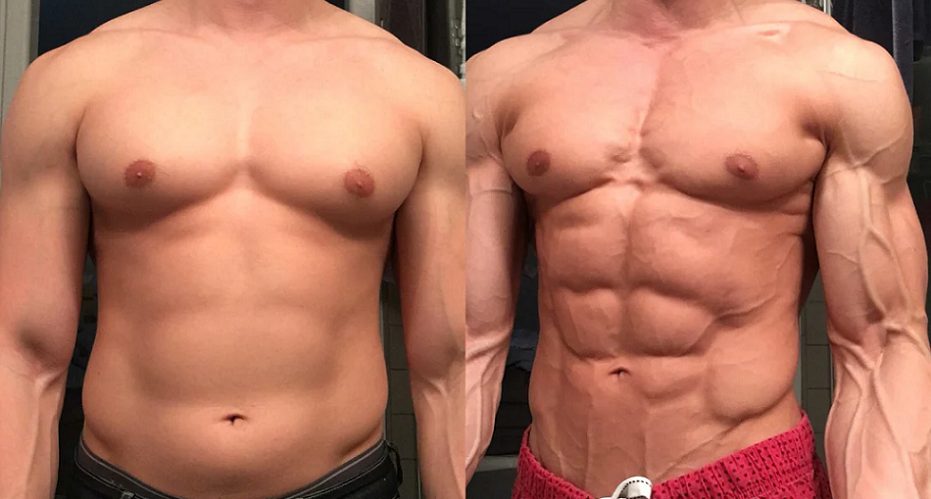
Helpful tips for a fat-reduction diet
Here are some tips to follow during a weight loss diet to guarantee steady fat loss:
- Eat more fiber-rich meals:
In case of a calorie deficit, eating carbohydrates such as non-starchy vegetables rich in fiber will help you feel full for longer. - Drink plenty of water: By staying constantly hydrated, you can better control your hunger and speed up your metabolism, even if only temporarily.
- Meal preparation is useful: Plan your meals in advance to save time, avoid falling into the diet trap, and steer clear of high-calorie fast food.
- Don't drink your carbs: Sugary drinks like sports drinks and sodas won't fill you up as much as complete, fiber-rich meals, and they may even worsen your hunger.
- Consider cardio: Adding aerobic activity, especially high-intensity cardio, to a weight training session will help you lose more fat.
Summary
The goal of a weight loss diet is to reduce body fat while maintaining muscle mass at an optimal level.
The amount of calories, protein, fat, and carbohydrates you should consume as part of a diet weight loss for bodybuilding is determined by your weight and lifestyle.
It is recommended to follow a slimming diet for only a few months before a competition and to accompany it with a weight training program.
Always consult your coach and/or doctor to determine if a weight-loss diet for bodybuilding is right for you. You can learn more about weight-loss diets by speaking with an IFBB professional here.
Leave a Reply
You must be logged in to post a comment.