


Everything you need to know about vitamin D: its benefits, its origin, its importance in particular for bodybuilding and its link with testosterone.
What is vitamin D?
Vitamin D is actually a family of vitamins, which consists of vitamins D2, D3, D4, D5 and D6. Vitamin D2 and D3 These are the two main forms of vitamin D, and we will therefore not discuss the others in this article. Vitamin D2 is of plant origin, while vitamin D3 is of animal origin. Both are brought by the’'food, but humans are also capable of synthesizing vitamin D themselves3, in proportions that are sometimes sufficient to meet its needs (therefore, it is not a true vitamin but a prohormone, (but this is a minor detail).
Vitamin D2 and D3 They both play equivalent roles. So much so that when we speak generically of "vitamin D," we are generally referring to both vitamins at once, D2 and D3. This will also be the case in the rest of this article.
The main function of vitamin D is to maintain adequate levels of calcium and phosphorus absorption by the intestines. This helps maintain calcium and phosphorus concentrations in the blood plasma and optimizes the mineralization of bones, cartilage, and teeth.
Vitamin D therefore plays a particularly key role in growth.
It also has a large number of other functions within the body. In particular, it is involved in the regulation of cell growth, neuromuscular function, immune function, and the reduction of inflammation.
How does vitamin D work? How is it able to have such a broad spectrum of action? What are the causes and consequences of a deficiency? We'll explore these questions in a comprehensive overview of everything related to vitamin D. Let's begin by examining the different sources of vitamin D.
Sources of vitamin D
As we briefly mentioned in the introduction, there are two sources of vitamin D:’food and the synthesis carried out by the organism itself.
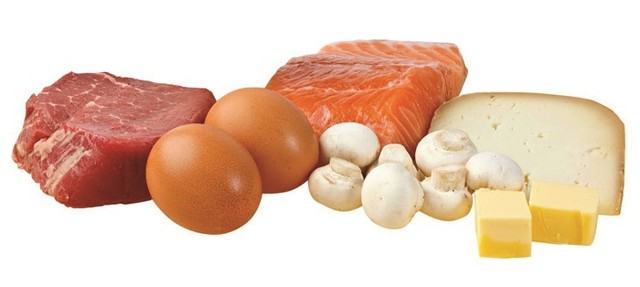
Foods containing vitamin D are actually quite few. They are mainly fatty foods, since vitamin D is fat-soluble. The richest food in vitamin D3 Cod liver oil is one example (containing 200 to 250 µg per 100 g). Oily fish (such as salmon, tuna, and mackerel) and bacon also provide a certain amount of vitamin D.3 (content of approximately 8 to 20 µg per 100 g). A small amount of vitamin D3 It is also found in beef liver, cheese, and egg yolks. Finally, some mushrooms can provide vitamin D.2.
However, dietary intake only constitutes part of the vitamin D available to the body. The body is, in fact, capable of synthesizing vitamin D.3 by itself, at the skin level. It is a molecule derived from cholesterol (7-dehydrocholesterol) which, when exposed to type B ultraviolet rays (290 to 320 nm), allows the initial synthesis of a previtamin D3, which is converted into vitamin D3. For this cutaneous synthesis of vitamin D3 For vitamin D production to occur, it is therefore necessary to expose oneself to direct sunlight. Moderate exposure of the face, arms, and legs for five to thirty minutes, twice a week, would allow the body to produce enough vitamin D to meet its needs. However, several factors can moderate the amount of vitamin D produced: these include the season, the time of day, cloud cover, pollution haze, as well as skin pigmentation and the use of sunscreens, which reduce the amount of UV radiation that can penetrate the skin. A question then arises: can prolonged sun exposure cause excessive production and vitamin D toxicity? The answer is no, because UV rays do destroy some of the vitamin D molecules.3 at the same time as they promote their formation. In other words, a balance is established between formation and destruction, preventing any excessive amount from accumulating. However, this should not excuse one from exercising caution and limiting sun exposure, as UV rays are carcinogenic and are notably responsible for many cases of skin cancer.
Therefore, a balanced diet combined with moderate sun exposure is able to provide the amount of vitamin D that everyone needs.
But how is vitamin D actually absorbed and what happens to it in the body? That's what we're going to look at now.
Vitamin D metabolism
The body makes no distinction between vitamin D obtained from food (and therefore absorbed by the lower part of the small intestine) and vitamin D synthesized in the skin. Regardless of its source, vitamin D undergoes the same processing.
This treatment aims to activate vitamin D, because, in its natural state, vitamin D is biologically inert. It requires two successive transformations to be activated.
First, it accumulates in the liver where it is converted into an intermediate compound (25-hydroxyvitamin D). This intermediate compound is then transported through the bloodstream to the kidneys, where it is converted into the active form of vitamin D (1,25-dihydroxyvitamin D). The activated vitamin D then returns to the blood and is transported to the organs that need it. Let's look in detail at how this happens.
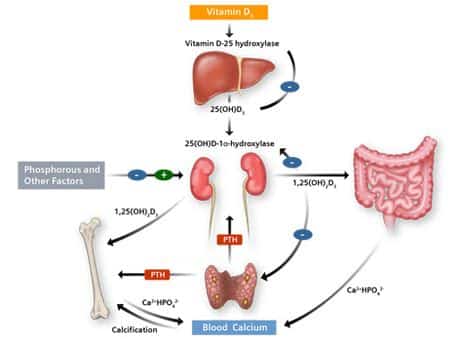
Mechanism of action of vitamin D
Vitamin D is absorbed by organs at the cellular level. The nucleus of target cells possesses a specific receptor to which only activated vitamin D can bind. Once the receptor-vitamin D complex is formed, the transcription of a given gene is activated or, in some cases, inhibited. Since the vitamin D receptor is present in most organs (particularly in the brain, heart, skin, sex glands, prostate, and breasts), vitamin D influences the expression of more than 200 different genes. This explains the broad spectrum of action of vitamin D.
We now understand how vitamin D works. For vitamin D to be fully effective, it needs to be consumed in adequate amounts. Let's look at the recommended daily intake of vitamin D.
Recommended daily intake of vitamin D
According to ANSES (the French Agency for Food, Environmental and Occupational Health & Safety), the recommended daily intake of vitamin D is 5 µg for children over 3 years old and for adults, and 10 to 15 µg for the elderly. This recommendation was established considering that cutaneous synthesis produces 50 to 70 µg of the daily requirement for this vitamin (which explains why it is lower than the recommendations in force in North America).
On average, the French population's consumption is lower than this recommendation, with children aged 3 to 17 consuming an average of 1.9 µg per day, while adults aged 18 to 79 consume 2.6 µg per day. Nevertheless, most people do not seem to suffer from any symptoms related to vitamin D deficiency, probably because cutaneous synthesis compensates for low dietary intake. However, the question remains as to the consequences of vitamin D deficiency, as well as its possible causes.
Vitamin D deficiency: consequences and causes
A chronic vitamin D deficiency primarily results in rickets in children and growing young people, and’osteomalacia In adults, in both cases, minerals no longer accumulate properly in the skeleton. Although the bones retain a normal mass, they become deformed, leading to bone and muscle pain.
Another consequence specifically concerns the elderly: this is osteoporosis, which is characterized by a loss of bone mass and therefore by a weakening of the bones.
Newborns, infants, and pregnant women are at increased risk of vitamin D deficiency due to high needs and, in the case of young children, due to low sun exposure.
In general, the causes of a vitamin D deficiency can be:
- an unsuitable diet, which permanently reduces vitamin D intake (in particular vegetarian, meat-free, fish-free, egg-free or dairy-free diets);
- Insufficient sun exposure or highly pigmented skin
- Incorrect absorption of nutrients in the small intestine
- a malfunction of the kidneys which are unable to convert 25-hydroxy-vitamin D into 1,25-dihydroxy-vitamin D.
It is also worth mentioning the consequences of excess vitamin D, often due to the ingestion of excessive amounts of foods rich in vitamin D or of dietary supplements. Symptoms then include headaches, high blood pressure, thirst, nausea, weight loss, or intense fatigue.
Vitamin D and testosterone

A scientific study conducted by an Austrian team and published in 2011 suggests that taking vitamin D in the form of dietary supplement increases the rate of testosterone in men. This result was confirmed by a second German study published in 2012. In both studies, the measured rate of testosterone It varied in the same way as the measured vitamin D level. However, the correlation between testosterone and vitamin D levels is not yet definitively established, and these results call for further studies to confirm them and establish cause-and-effect relationships. It is likely, nevertheless, that if this result is confirmed, it has something to do with the fact that testicular cells possess specific receptors for vitamin D.
If the testosterone Vitamin D plays a major role in male sexuality (particularly sperm production and libido) and is also involved in maintaining muscle mass. Any athletic man wishing to develop his muscles should therefore ensure he has adequate vitamin D intake to guarantee his testosterone levels and thus facilitate muscle growth. This is especially true in the context of bodybuilding.
The importance of vitamin D for bodybuilding
But this is not the only reason that could prompt the bodybuilders to consume vitamin D. Here are some examples that show the importance of vitamin D for bodybuilding:
- Vitamin D plays a role in neuromuscular function. As such, it increases muscle tone and performance, and therefore promotes training.
- Vitamin D is involved in immune function. By helping to fight all kinds of illnesses (including common colds), it helps combat fatigue and therefore, in this respect, also makes training more effective.
- Vitamin D helps maintain healthy bones. Since bones and muscles are interconnected, strong muscles are impossible without strong bones.
- Finally, according to a recent scientific study, vitamin D may help eliminate fat cells and thus promote leaner muscle mass. This effect has at least been demonstrated in mice. Whether this effect exists in humans is still uncertain.
Taking adequate amounts of vitamin D appears to be beneficial for bodybuilders and athletes in general. However, further comprehensive studies will be needed to establish the full benefits of vitamin D supplementation.
To conclude this report, I invite you to consult our article: The importance of diet in bodybuilding who will tell you even more about the useful contributions to our sport.
Leave a Reply
You must be logged in to post a comment.