


Discover a new method of doping with peptides by understanding their role, origin and properties for athletes.
Throughout history, humankind has sought to improve physical performance and surpass its limits. Doping in sports is a concrete example of this.
All major sporting competitions of the modern era have had their share of "scandals": the Tour de France, the Olympic Games, football, baseball… Doping was even already present in antiquity. The earliest examples, described by Greek authors, date back to the 6th century BC.
The World Anti-Doping Agency has been able to evolve alongside doping methods themselves in order to make reliable and dissuasive controls.
These rigorous controls, combined with the significant side effects of products like anabolic steroids, have deterred many professional athletes from using performance-enhancing drugs. Body sculpting has also become a priority for the average athlete, who, likewise, no longer has any qualms about using such products.
It would therefore seem that the World Anti-Doping Agency has cause for concern with a resurgence in the number of athletes involved, but especially because of a new generation of undetectable products: peptides (or peptide hormones).
What are peptides?
THE peptides are molecules naturally synthesized by the body. These peptide hormones are actually "messengers" that trigger the production of new hormones, such as... testosterone For example.
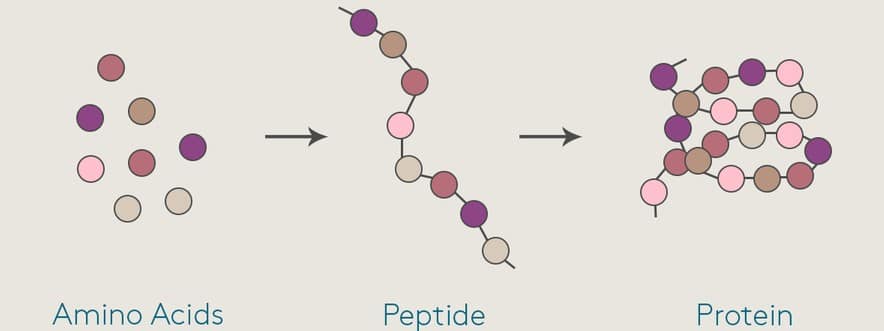
More commonly referred to as "peptide bonds", a peptide is a polymer of amino acids linked together.
Peptides are molecules created by joining two or more amino acids. They are present in all living cells and possess a wide variety of biochemical activities. Generally, molecules with fewer than fifty amino acids are called peptides. Larger sequences are called proteins. Thus, peptides can be considered tiny proteins that are simply chains of amino acids.
Peptides are a revolution. This research, which came to fruition just a few years ago, is beginning to make its mark in the world of sports and doping.
One molecule for each sport.
Gene doping is based on extensive research in gene therapy.
In order to find a way to restore muscle growth in people with muscular dystrophies, Dr. Se-Jin Lee's team at Johns Hopkins University in Baltimore (USA) carried out a double genetic modification in 2007 on mice, which then produce more follistatin – a hormone that promotes muscle growth – and less myostatin – a protein that limits it.
The result: rodents literally built like bodybuilders, displaying a musculature 4 times greater than that of normal animals.
By working on the PPAR gene, Johan Auwerx's team at EPFL recently created mice that run not faster, but twice as long. And that's not all: sports medicine physicians at the Technical University of Munich have identified 165 other genes that could improve athletic performance.
It is therefore only a small step to imagine a complete range of genetic techniques adapted to each sport according to the required abilities (endurance, strength, speed…) to increase the performance of athletes.
Undetectable molecules, the WADA in a delicate situation.
Recognizing the enormous potential of the method, the World Anti-Doping Agency (WADA) anticipated the trend. In 2003, it generically included gene doping on the official list of "prohibited substances and methods".
The WADA has since funded several research programs to try to develop reliable detection testing methods. Indeed, as Bengt Kayser points out :
«"At the moment, we don't know how to detect genetic doping very well. The product sought is often very similar to the substance produced by the body and therefore indistinguishable from naturally occurring molecules."»
Specialized laboratories are constantly pushing the boundaries.
Peptides are therefore now considered doping agents, virtually undetectable, and producing surprising results according to some users.
(Testimony from Vincent, amateur cyclist: "Since I discovered peptides, I only take those and without risking testing positive in anti-doping tests. But above all, without side effects, unlike classic doping products such as EPO or steroids that I used to use.").
Some laboratories have gone even further in their research and now offer a mix of peptides. They combine two peptides to create a combined effect, even more powerful than if these two peptides were taken separately.
Athletes are no longer the only ones concerned by peptides, and you can easily imagine that these products are consumed by everyone.
Research is staying one step ahead of controls.
With this new type of product, doping is far from disappearing. Until now, athletes feared suspension and hefty fines if they tested positive. But with this new type of doping, known as "genetic" doping, which is virtually undetectable in tests, it's highly likely that many athletes will turn to these new methods.
WADA will therefore have to redouble its efforts to continue effectively combating this new form of doping and thus guarantee clean and fair competitions. If it fails, we will very likely see many world records fall one after another.
Another solution would be to allow this type of doping so that all athletes have the same chances.
What do you think?
Voir aussi : notre PEPTIDE CALCULATOR: YOUR DOSAGES, WITHOUT CALCULATIONS OR ERRORS.
Leave a Reply
You must be logged in to post a comment.