


The history of bodybuilding through the ages and civilizations: understanding its aesthetic meaning, discovering its evolution and the men who shaped it.
According to psychology professor Albert Mehrabian, only 71% of our communication is verbal, 38% is paraverbal, and 55% is nonverbal. Given this observation, we can easily understand how our attitudes, unconsciously, speak for us.
More than our words or fine speeches, a look, a gesture, or a posture will reveal a part of our inner being. The shape of our body is also important because it communicates who we are and our lifestyle.
In the West, for example, curves are a sign of a sedentary lifestyle, suggesting a hearty appetite but also a neglect of one's appearance. In contrast to curves, a woman's slender figure awakens desire in men. And a muscular body is associated with dynamism, modernity, virility, and strength.
Our body therefore presents a more or less flattering image of ourselves to others. But this body is not a frozen mass. Our body is alive and is a source of emotions. It is the guardian of our history, our hopes, our suffering, and our well-being.
And throughout this process, our minds will seek to shape our bodies in order to affirm and accentuate our personalities. Some will embark on a diet or exercise regimen to eliminate unsightly curves. Others will showcase their bodies through artistic practices such as photography or sculpture.
Between sport and body enhancement
Whether we are athletic or not, the mention of the word bodybuilding rarely leaves people indifferent. Indeed, as soon as we talk about bodybuilding, our minds immediately conjure up the image of a "superman" with oiled muscles ready to burst.
This vision will appear terrifying, even disgusting, to some. For others, the extraordinary development of the muscles will seem unreal and unattainable.
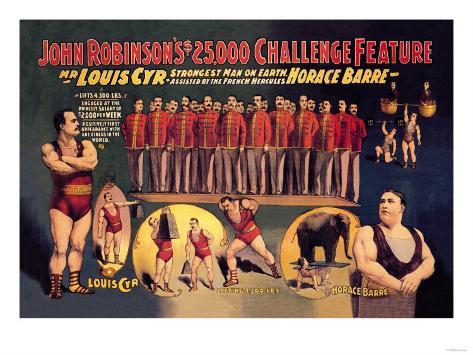
But this extreme muscle development, the appearance of veins, also recalls anatomical illustrations where each muscle is perfectly defined. This latter perception of bodybuilding evokes a certain perfection of the body. Bodybuilding, in this development of muscles, reveals often hidden and unknown parts of our anatomy. We can only be fascinated by the result, however. And as we saw above, muscle is a symbol of virility and strength.
But beyond these different feelings, do we really know bodybuilding?
Too often, we reduce bodybuilding to excessive muscle building or even a demonstration of strength. These simplifications represent misunderstandings of this discipline.
Bodybuilding, also known as bodybuilding, is the construction of the body through the development of muscle mass in an aesthetically pleasing way. We can therefore understand that bodybuilding combines both athletic training and artistic expression.
It is also important to emphasize that A bodybuilder must have a good lifestyle, particularly in terms of diet and rest for his body.
From evoking the beauty of the body to the realization of a discipline
How did the practice of bodybuilding originate?
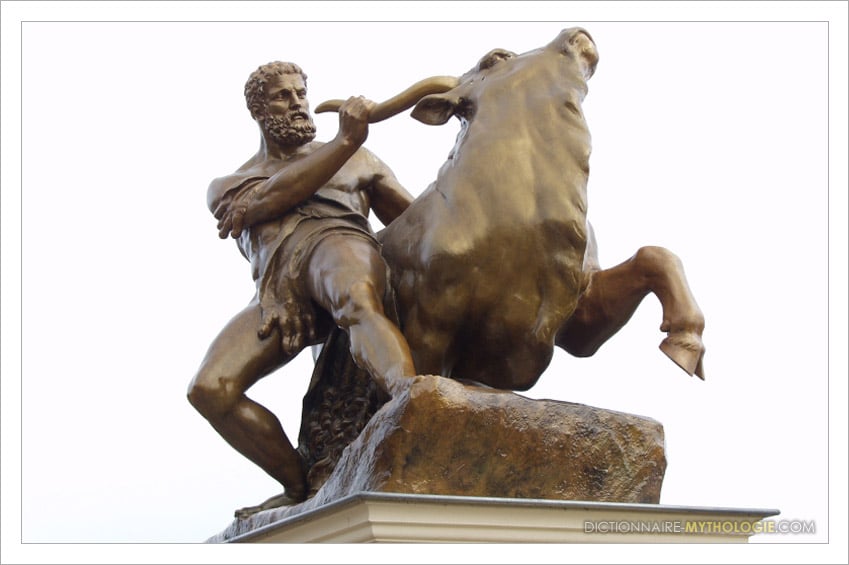 The evocation of the beauty of the body through the harmony of its muscular mass appears as early as Antiquity with the myth of Hercules and Greek statues.
Hercules accomplished what no man could: the twelve labors entrusted by Eurystheus. Through his exploits, we find this notion often attributed to bodybuilders of the "superman," of self-transcendence. Furthermore, representations of Hercules in sculptures reveal a muscular body with perfect lines.
The Greeks revered the body, a body that was half-human, half-divine. They materialized this ideal beauty through their sculptures depicting nude bodies with defined muscles, perfect proportions, and symmetrical torsos. These sculptures still inspire admiration today and established the first criteria of bodily aesthetics, similar to those of bodybuilding in terms of muscle development and artistic expression.
Building on this ancient culture of body aesthetics, bodybuilding as we know it today would later develop thanks to passionate individuals who would take this aesthetic and materialize it as a sporting discipline.
While not the founder of modern bodybuilding, the personality of Georges Hébert He contributed to the birth of the discipline through his focus on physical fitness, particularly in men. Indeed, this French naval officer, born in 1875, discovered through his travels that men he called "primitive," living close to nature, possessed excellent physical condition and developed perfect musculature. From this observation, Georges Hebert developed the "natural method," based on practicing movements in a natural environment.
His approach would later influence several prominent figures in bodybuilding. In particular Eugen Sandow, German athlete, considered today as the true founding father of bodybuilding.
Who in the bodybuilding world doesn't know the name Sandow?
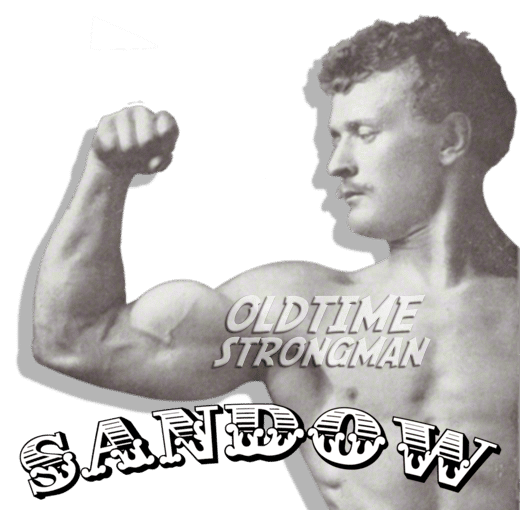 He was the first bodybuilder to achieve international recognition for his performances. His passion for the aesthetics of the body, showcasing perfect musculature, dates back to his early childhood. He lived with his father in Italy for the first years of his life, and Roman statues quickly became a true fascination for the boy. At the age of 19, he began performing feats of strength in circus shows across several European countries. He was noticed by an American promoter, Florenz Ziegfield, He participated in the great 1893 World's Fair in Chicago. There, he distinguished himself from the other participants who had come to demonstrate their strength. Indeed, during his performances, Eugen Sandow placed more importance on his posture, the highlighting of his muscles, and the overall aesthetics of his body than on strength itself. This distinctive characteristic thrilled the public and contributed further to the development of the sport.
As early as 1920, a treatise on bodybuilding was written by Earle Liederman.
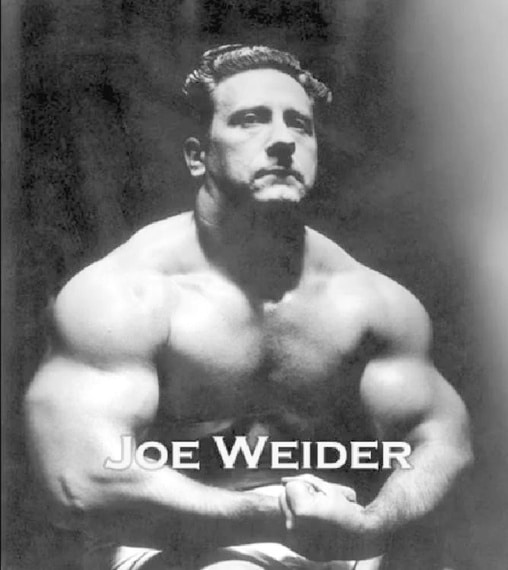 The second most important figure in the development of the sport was undoubtedly Joe Weider. This Canadian bodybuilder was born in 1919. His involvement and contributions to the popularization of bodybuilding were considerable. Joe Weider was passionate and fascinated by the beauty of muscles from a very young age. Starting in 1936, he developed new training techniques to intensify muscle growth. In 1949, he and his brother, Ben Weider, founded the International Federation of Bodybuilding. Also a businessman, he created several bodybuilding magazines, notably FLEX and Muscles and fitness. But his most significant contribution will remain the creation of the major international bodybuilding competition: Mister Olympia 1965. Joe Weider represents a "father figure" to many of today's bodybuilders, and especially to the famous actor, Arnold Schwarzenegger. Indeed, it was Joe Weider who discovered the young Arnold in Austria. He became his mentor and trainer. Upon his death in 2013, Arnold Schwarzenegger paid him a moving tribute.
As bodybuilding becomes increasingly popular, it is arriving in gyms and at Muscle Beach, notably with Larry Scott, the first Mr. Olympia winner. The public has been coming since 1987 to admire the training of bodybuilders on Muscle Beach, which was set up for this purpose.
Today, Frédéric Mompo, coach and multiple world champion in this discipline, is fighting to break down prejudices about bodybuilding. He wants to make the public understand that bodybuilding is first and foremost a lifestyle requiring impeccable hygiene. Bodybuilders are true artists of the body.
Discovering the main bodybuilding competitions
The very first bodybuilding competition (the Great Competition) was organized by George Sandow himself in 1901 in England. The announcement of the competition sparked intense enthusiasm among English students. The aim of this competition was to promote physical fitness and the development of muscle mass. It established several selection criteria, including symmetry, the participant's health, body balance, and tissue quality. The winner was William L. Murray.
But the real, the essential and The most prestigious bodybuilding competition is Mr. Olympia. Developed by Joe Weider in 1965, the first Mr. Olympia competition took place on September 18, 1965, in the Brooklyn borough of New York City. Since then, Mr. Olympia has represented the most prestigious international competition, professionalizing bodybuilding. The competition is managed annually by the International Federation of Bodybuilding and Fitness (IFBF).
All these personalities come from different backgrounds, environments, and countries. But what unites them is this passion, this veneration for the beauty of a perfect body, bordering on the unreal, a body practically deified.
Bodybuilding is the art of bringing this body to light thanks to a lifestyle choice requiring rigor, patience and great moral strength.
Leave a Reply
You must be logged in to post a comment.